How Much Does Invisalign Cost in Ontario? (2026 Guide)
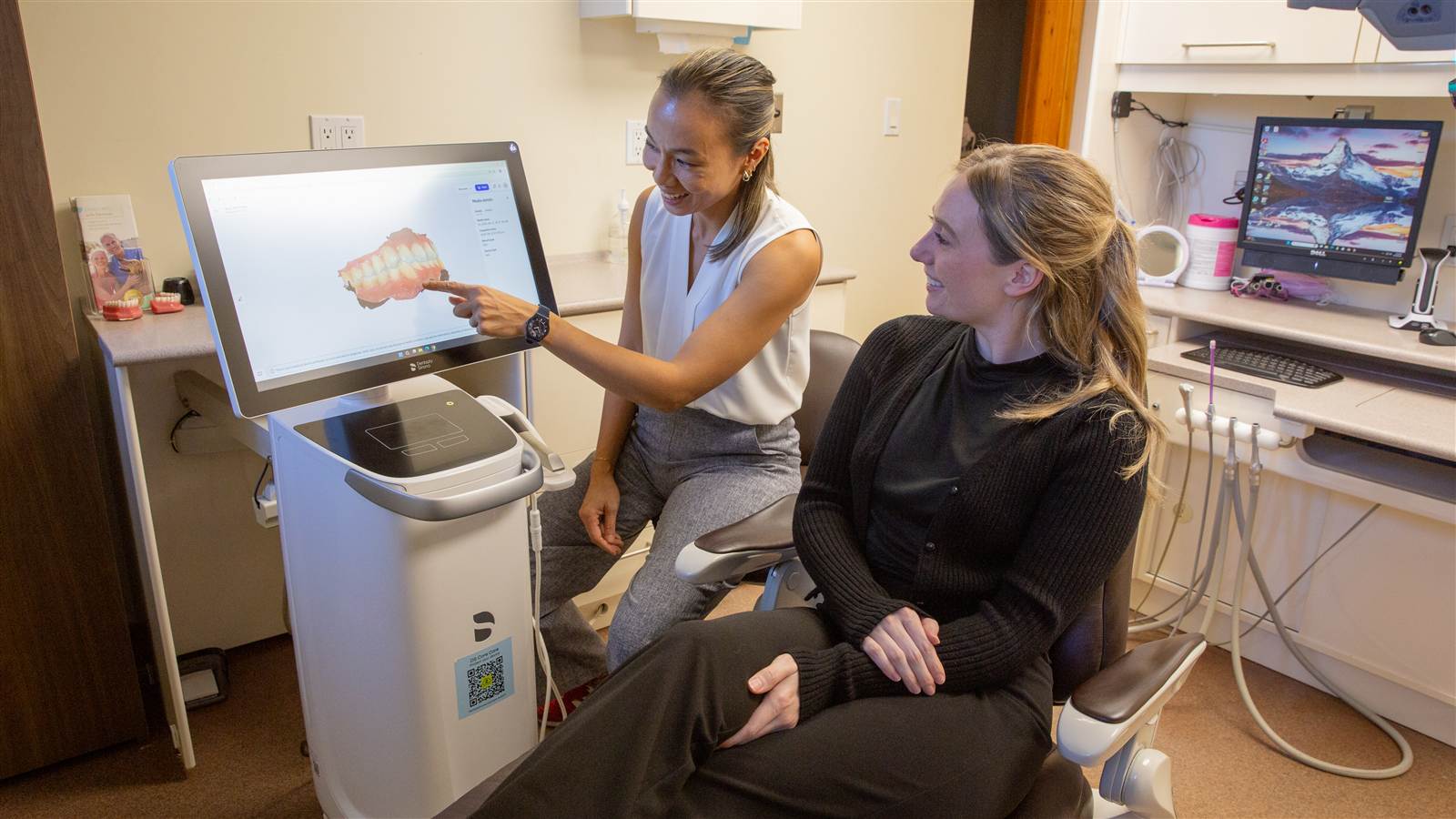
What does Invisalign cost in Ontario?
Invisalign pricing in Ontario tracks case complexity more than anything else. Small fixes, like one rotated front tooth or a gap that reopened years after childhood braces, usually fall between $3,500 and $5,000. Moderate crowding or spacing with some bite correction runs $4,500 to $7,000. Comprehensive treatment for heavy crowding, deep overbites or underbites typically lands between $6,000 and $8,500, and the most involved cases can pass that. Published prices at Toronto-area clinics and orthodontic offices cluster tightly around these ranges, so a quote far outside them deserves a question or two.
Those figures should buy the whole package: the 3D scan and records, every set of aligners, the small tooth-coloured attachments bonded to your teeth, and the progress checkups through treatment. Consultations are free at many clinics and up to about $350 at others. Retainers at the end are the item most often left out of the quote, and they matter, so ask about them before you sign anything.
Behind the scenes, Invisalign charges the dentist a lab fee based on the package tier. Express and Lite packages cap the number of aligners, while comprehensive packages allow as many as the case needs. Fewer aligners means a lower lab bill, which is why a genuinely minor case should be quoted well below the price of a full correction rather than a few hundred dollars under it.
| Item | Typical Ontario range | What changes it |
|---|---|---|
| Consultation and records | $0 to $350 | Many clinics offer free consults; 3D scans and X-rays are sometimes billed separately |
| Minor case (Invisalign Express or Lite) | $3,500 to $5,000 | Number of aligners needed and how far teeth must move |
| Moderate case | $4,500 to $7,000 | Bite correction adds aligners and months |
| Complex or comprehensive case | $6,000 to $8,500+ | Treatment length; whether the package includes unlimited aligners and refinements |
| Invisalign for teens | $3,200 to $8,000 | Case scope; teen packages add compliance indicators and replacement aligners |
| Retainers after treatment | $200 to $800 per set | Standard clear versus Vivera; whether the first set is bundled into the quote |
Is Invisalign more expensive than braces?
Less than most people expect. Traditional metal braces in Ontario run roughly $3,000 to $7,500, and Invisalign runs $3,500 to $8,500. For the same mouth at the same clinic, the two quotes often land within $500 to $1,000 of each other. Ceramic braces, the tooth-coloured kind, usually sit near the top of the braces range, which narrows the gap further.
Complexity drives both prices. A ten-month minor correction is inexpensive in either system, and a two-year bite reconstruction is expensive in either system. The cost differences show up in the fine print instead. Braces need more frequent adjustment visits and broken brackets add appointments. Aligner patients who lose trays or wear them too few hours a day can need extra rounds of aligners, and some clinics bill for those.
The honest answer is that the decision is rarely financial. It comes down to how visible you want the treatment to be, whether you will reliably wear a removable appliance 20 to 22 hours a day, and what your dentist or orthodontist judges will actually move your teeth on schedule. A patient who knows they will forget the trays is often cheaper and better served in braces.
How much will insurance actually pay?
Only plans with an orthodontic rider cover Invisalign, and plenty of workplace plans skip it. Where the rider exists, the standard structure is 50% co-insurance up to a lifetime maximum of $1,500 to $3,000 per person. Lifetime means exactly that. The maximum does not reset each January, and once it is spent it is gone.
Two mechanics catch people off guard. First, insurers rarely pay an orthodontic claim in one lump. Most spread the reimbursement across the treatment in monthly or quarterly instalments, so your own cash carries more of the early bills. Second, the maximum applies per person being treated, so a parent's plan covering two kids in aligners pays the maximum twice, once for each child.
Before committing, have the clinic submit a pre-determination to your insurer. It comes back with the exact dollar figure your plan will pay, which beats every estimate in this article. If you and a spouse both have coverage, coordination of benefits lets you claim the unpaid balance under the second plan, so two lifetime maximums can stack. A health spending account, where you have one, can absorb part of the remainder with pre-tax dollars.
Does the CDCP or OHIP cover Invisalign?
No on both counts, as of August 2026. OHIP does not pay for dental care delivered in dental offices, and that includes orthodontics at any age. The Canadian Dental Care Plan covers cleanings, fillings, dentures and other core services for eligible households, but orthodontic treatment is not on its list of covered services.
There is a wrinkle worth reporting accurately, because it has been in the news. The federal government announced that a limited orthodontic benefit would be added to the CDCP, originally slated for sometime in 2025. It would apply only to medically necessary cases: children under 18 with a severe, functionally handicapping malocclusion as scored on the Modified HLD Index, and adults with craniofacial anomalies such as cleft lip and palate. It would require pre-authorization and carry a spending cap.
That benefit has not launched. The CDCP Dental Benefits Guide in effect since April 1, 2026 still lists orthodontic services as available at a date to be determined. Even when it arrives, it will not cover alignment done for appearance, which describes most adult Invisalign. There is also a structural point: CDCP eligibility requires having no access to private dental insurance, so anyone whose workplace plan includes orthodontic benefits is outside the program regardless.
What does the monthly payment math look like?
Take a moderate case quoted at $6,500, with a plan that covers orthodontics at 50% and a $2,000 lifetime maximum. Half of $6,500 is $3,250, but the cap cuts the insurance contribution to $2,000, which leaves you responsible for $4,500.
On an interest-free in-house plan over 24 months, that is $187.50 a month. Put $1,500 down and the monthly payment drops to $125. Stretch the same $4,500 over 36 months through third-party financing at a rate near 10% and the payment is about $145 a month, but roughly $700 of what you pay is interest. Interest-free through the clinic, where offered, is almost always the better deal.
Ask each clinic what its plan actually requires: the down payment, the term, whether the rate is genuinely zero or a promotional teaser, and what happens to payments if treatment runs longer than planned. Keep in mind that your insurer's instalment schedule runs on its own clock, so the reimbursement trickles in while your payments to the clinic continue regardless.
Why do Invisalign quotes differ so much between clinics?
Two clinics can look at the same teeth and quote $4,800 and $7,200, and neither is necessarily gouging. The first difference is judgment. One provider may believe a Lite package will finish the case, while another plans a comprehensive package with room for every contingency. Both are defensible readings of the same scan; they just cost different amounts.
The second difference is what the number includes. Refinements, the extra rounds of aligners ordered when teeth drift off track, are bundled into some quotes and billed separately in others, often several hundred dollars a round. The same goes for records, mid-course scans and retainers. A low headline price frequently excludes most of these items, then recovers them one invoice at a time.
Overhead and experience matter too. Downtown Toronto rent shows up in downtown Toronto quotes, and high-volume aligner providers sit in different Invisalign tiers, which changes their lab costs. When comparing quotes, put the same three questions to each clinic: are refinements included, are retainers included, and does the fee change if treatment runs long. The answers tell you more than the sticker does.
What will retainers cost after Invisalign?
Teeth drift for the rest of your life, so a retainer is not optional after aligners come off. Most people wear one nightly, indefinitely. It belongs in your budget from the start rather than as a surprise in the final month.
In Ontario, a standard clear removable retainer runs about $200 to $600 per set. Vivera, the retainer line made by Invisalign's manufacturer, typically costs $300 to $800 per set, and multi-set packages of four uppers and four lowers run roughly $800 to $1,500. Clear retainers wear out with grinding and daily handling, and most people replace them every one to three years.
Some treatment quotes include the first set and many do not, so ask at the consultation and get the answer in writing. If a retainer cracks or disappears later, a replacement costs the same range again, which is the practical argument for a multi-set package if you know you are hard on appliances.
Common questions
Is Invisalign cheaper than braces in Ontario?
They usually cost about the same. Metal braces run $3,000 to $7,500 and Invisalign runs $3,500 to $8,500, and for the same case at the same clinic the quotes often sit within $1,000 of each other. Case complexity, not the appliance, drives most of the price.
Does OHIP cover Invisalign?
No. OHIP does not pay for dental or orthodontic care provided in dental offices, at any age. Provincial coverage is limited to specific hospital-based dental surgery and targeted programs, none of which include aligners.
Does the Canadian Dental Care Plan cover braces or Invisalign?
Not currently. A limited orthodontic benefit for medically necessary cases was announced for 2025, but the CDCP benefits guide in effect since April 2026 still lists it as available at a date to be determined. Even once it launches, alignment done for appearance will not qualify.
How much does insurance typically reimburse for Invisalign?
Plans with orthodontic coverage usually pay 50% of the cost up to a lifetime maximum of $1,500 to $3,000 per person. The money normally arrives in instalments spread across the treatment, not as one payment. A pre-determination from your insurer gives you the exact figure before you start.
Can I claim Invisalign under two insurance plans?
Often, yes. If you and your spouse each have orthodontic coverage, coordination of benefits lets you submit the unpaid balance to the second plan after the first pays. Two separate lifetime maximums of $1,500 to $3,000 each can stack, covering a large share of a mid-range case.
Is Invisalign tax deductible in Canada?
Orthodontic work is an eligible medical expense for the federal medical expense tax credit, provided it is not purely cosmetic. Keep your receipts and claim only the portion insurance did not reimburse. An accountant can tell you how the credit interacts with your other medical expenses for the year.
How long does Invisalign treatment take?
Minor cases often finish in 6 to 8 months, moderate cases in 12 to 18 months, and complex corrections can run 24 months or more. Wearing the aligners 20 to 22 hours a day is what keeps a case on schedule. Refinement rounds at the end can add a few months.
What happens if I lose an aligner?
Call the clinic. You will usually move to the next aligner early or step back to the previous one while a replacement is ordered. Many clinics charge a per-aligner replacement fee, so ask what that fee is before treatment starts.
Are mail-order aligners a cheaper option?
They advertise lower prices, but nobody examines your teeth in person, takes X-rays, or monitors your roots and gums during treatment. The largest mail-order provider shut down in 2023 and left customers mid-treatment. For anything beyond trivial movement, supervised care is the safer spend.
Do I need an orthodontist, or can my dentist do Invisalign?
Both general dentists and orthodontists provide Invisalign, and the aligner system is the same. Orthodontists have specialty training that matters most in complex bite cases, and dentists commonly refer those out. For mild to moderate alignment, an experienced general dentist is a routine choice.
Why is my quote higher than the ranges in this article?
Usually because your case needs more aligners than average, or because the quote bundles items other clinics bill separately, such as refinements and retainers. Ask for an itemized version. Seeking a second opinion is normal in orthodontics and no dentist should resent it.
Talk it through with a Waterloo dentist
Chiu Dental — beside Waterloo Park. Mon–Tue 9–6 · Wed–Thu 8–5 · Fri 8–1.
- Canadian Dental Care Plan: what services are covered (Government of Canada)
- CDCP Dental Benefits Guide (Government of Canada)
- Canadian Dental Care Plan FAQ, Public Health Ontario and University of Toronto Faculty of Dentistry, October 2025 revision
- Invisalign Cost in Ontario, Forest Manor Dental (Toronto)
- Invisalign Cost Breakdown, York Orthodontics (Toronto)
- Retainer Price in Canada, KWC Dental (Kitchener-Waterloo)